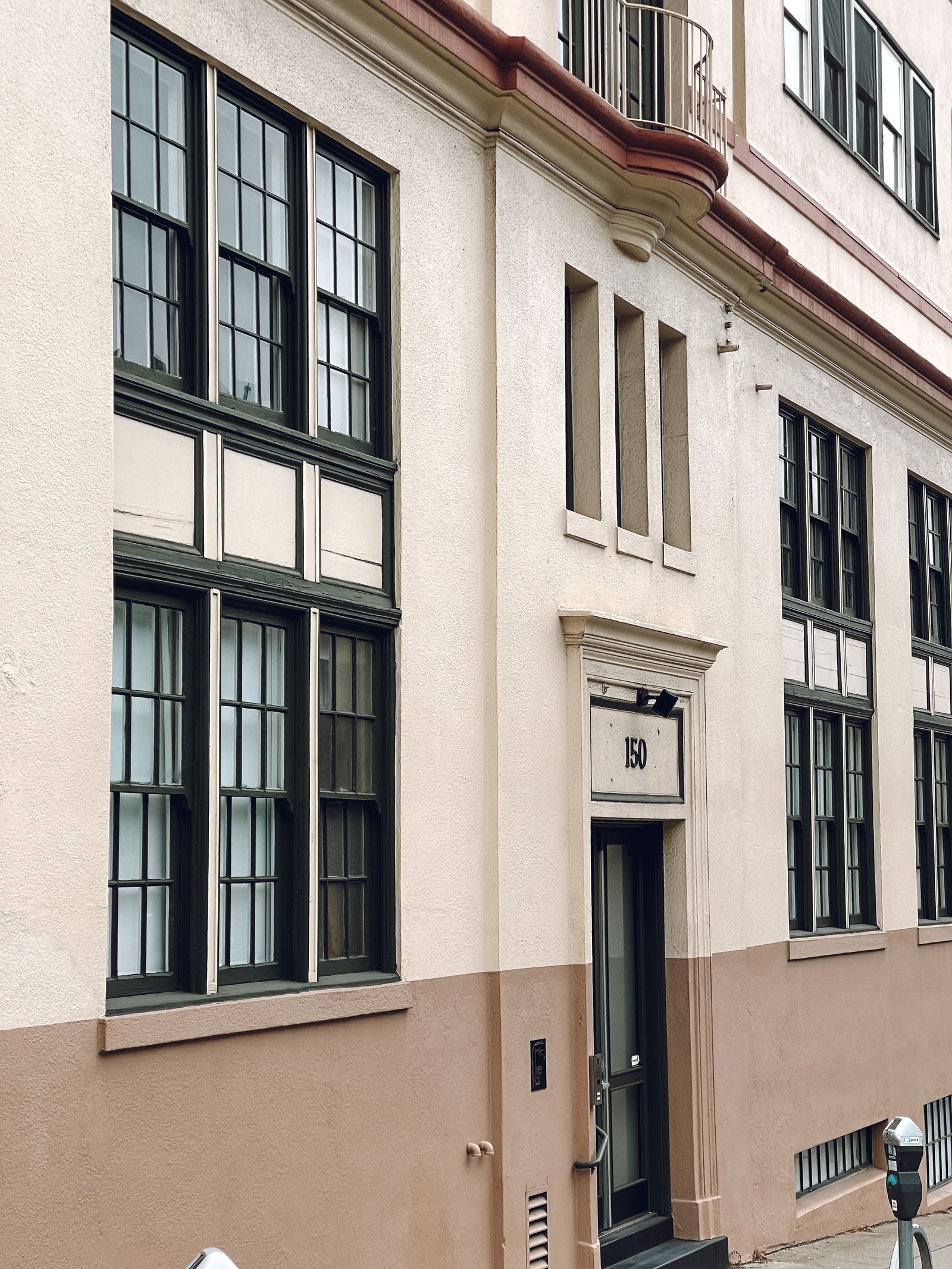
What soft washing is designed to do
Soft washing generally uses a compatible cleaning solution, controlled application, dwell time, and a measured rinse rather than relying on high impact to remove every mark. On suitable masonry, painted surfaces, stucco, EIFS, metal, or other tested materials, it may address organic staining, algae-like growth, mildew-like growth, pollen, bird residue, and some atmospheric film. The chemistry still needs judgment: concentration, dwell time, temperature, surface condition, plant protection, glazing protection, metal compatibility, rinse path, and the expected finish all matter.
Soft washing is not automatically gentle simply because the pump pressure is lower. An unsuitable solution, poor rinse, windborne overspray, missed protection, or uncontrolled runoff can damage plants, metals, coatings, or nearby property. A professional scope should identify test areas and pause points, especially where a Virginia Beach facade has salt-exposed hardware, old paint, sealants, balconies, storefronts, landscaping, or a mix of materials. The goal is a compatible process, not a slogan.
Soft washing may be a practical starting point for a shaded brick elevation in Town Center, a hotel wall near the Oceanfront, a painted medical-office facade in Princess Anne, or a retail elevation in Lynnhaven when the visible soil is primarily organic. It may not resolve mineral scale, oxidation, embedded sand, soot, failed coatings, rust, damaged mortar, or water-related staining. Those conditions need a different treatment, investigation, or trade.
- Good candidates can include compatible facade materials with organic staining and accessible protection points.
- The solution, dwell time, rinse, weather, and substrate should be selected together.
- Test areas help separate removable growth from salt, minerals, oxidation, soot, and deterioration.
- Soft washing does not repair leaks, failed joints, spalling, corrosion, or failing coatings.
Where pressure washing can make sense
Pressure washing may be appropriate for selected sound concrete approaches, loading pads, parking areas, curbs, service yards, garage surfaces, and other durable hardscape when surface condition, force, nozzle, distance, flow, drainage, and surrounding uses have been evaluated. It can help with soil, tire marks, some traffic film, and hardscape deposits that are not best addressed by facade chemistry. Even then, a larger machine does not automatically produce a cleaner or more durable result.
Excess force can etch softer concrete, strip paint, disturb mortar, damage stucco or EIFS, open sealant joints, push water behind coatings, dislodge fragile trim, or drive sand and dirty water into cracks. On an Oceanfront property, pressure and rinse water may also move salt, sand, and debris toward guest paths, storefronts, drains, or neighboring businesses. A Town Center garage, a Lynnhaven shopping center, and a medical-office drop-off each need a site-specific plan for pedestrians, vehicles, accessible routes, and runoff.
Ask what pressure will exist at the surface, not only at the machine. The quote should explain nozzle, distance, flow, test areas, protection, openings, drainage, and exclusions. It should also say whether the scope is cleaning concrete, treating a facade, removing a specific deposit, or investigating a condition. Pressure is a tool for an evaluated surface, not a default treatment for a building.
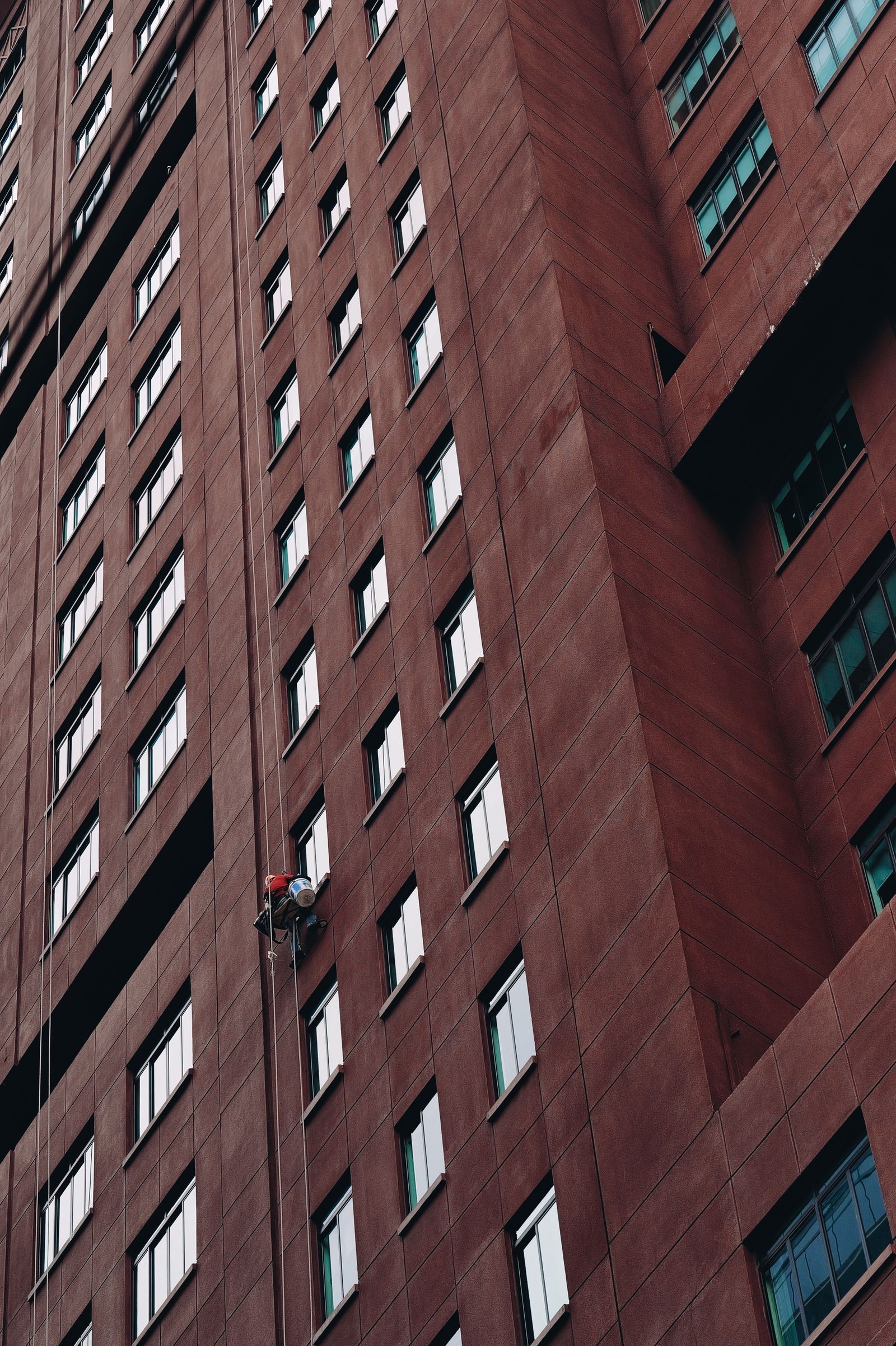
Use the deposit and material as the decision rule
Begin with the mark. Green or dark organic growth on a shaded wall may respond to a compatible soft-wash process. Salt haze on Oceanfront metal or glass may need a residue-specific rinse and careful protection. Mineral deposits beneath a drip edge may require a different treatment. Oxidation on painted metal, soot near a generator or loading area, tire marks on concrete, and sand-bound traffic film each call for different expectations. A clean-looking result is not guaranteed by selecting the strongest equipment.
Then identify the material. Brick and mortar can have different tolerances. Painted block, stucco, EIFS, precast, metal panels, glass, sealants, and coatings can fail in different ways. A medical building may have vulnerable landscaping and air intakes. A hotel may have balconies, guest-facing glazing, and outdoor furniture. A retail center may have signs and multiple tenant storefronts. A military-adjacent property may add security, access, and documentation rules. The method should be mapped to material and use, elevation by elevation.
A representative test area is useful when the cause or response is uncertain. It allows the property contact to see the likely improvement and observe whether the surface, coating, joint, or runoff behaves as expected. The test should not be presented as proof that every elevation has the same condition. Differences in sun, shade, wind, salt exposure, repair history, and drainage can change the result across one building.
Account for Virginia Beach weather and coastal exposure
Virginia Beach adds variables that can change the method or the work window. Salt-laden air, humidity, wind, sand, intense sun, heavy rain, and coastal storms affect how a solution stays on a wall, how quickly a surface dries, where rinse water travels, and whether pedestrians or landscaping can be protected. An Oceanfront elevation may be windier and more exposed than a sheltered wall in Princess Anne. A shaded Town Center recess may stay wet longer. A Lynnhaven parking area may direct water toward a curb inlet or low landscaped zone.
The forecast should be part of the method decision. Wind can carry spray and make aerial or lift work unsuitable. Rain can dilute an application and change drainage. Lightning and storm bands can make staging unsafe. Heat and direct sun can shorten dwell time. A plan should establish weather triggers, pause authority, protection, and rescheduling before equipment arrives. The current conditions matter more than a generic claim that one method works in every season.
Recurring staining should also prompt a water-path review. Gutters, scuppers, downspouts, parapets, failed sealants, irrigation, condensation, and roof edges may keep a section wet. Cleaning without documenting the cause can lead to repeated work and a misleading comparison between methods. A proposal should separate cleaning from repairs or building-envelope investigation.
Compare occupied-site risk, not just cleaning speed
The fastest equipment setup is not necessarily the fastest way to return a property to normal operations. Around a hospital or medical office, patients and emergency routes need priority. Around a hotel, arrivals, luggage, dining, pools, and guest rooms may remain active. At Town Center, office traffic, restaurants, garages, and events can overlap. In Lynnhaven, tenants, shoppers, delivery vehicles, and accessible routes share the same pavement. A military-adjacent or controlled site may require approved access and photography rules. The work plan needs people and vehicles considered alongside the surface.
Soft washing can reduce impact on some compatible facades, but it still needs barriers, spotters, hose routing, plant protection, glazing protection, and a runoff plan. Pressure can be appropriate on a controlled hardscape zone, but spray, noise, splash, and dirty water may require more separation. A hybrid plan can soft wash upper or delicate elevations, use controlled pressure on selected concrete, and hand-detail signs, doors, canopies, or storefront edges. The right comparison is the total controlled process and expected result.
Before choosing a method, ask who can pause the work, where water comes from, where it will go, which entrances must stay open, whether the property has drains or swales, and what documentation the facilities team needs. Drainage is not an afterthought: treated water and removed soil should be managed according to the site and applicable requirements. The first rinse is an opportunity to verify the plan before a larger phase continues.
- Map entrances, accessible routes, air intakes, loading areas, landscaping, vehicles, and public paths.
- Confirm water access, hose routing, barriers, spotters, security, emergency access, and pause authority.
- Separate cleaning expectations from repairs, restoration, leak diagnosis, and coating replacement.
- Document included elevations, access equipment, weather contingencies, drainage assumptions, and exclusions.
Questions to ask before accepting a quote
Ask which material and deposit each method is intended to address. Ask whether a test area is included, how the surface pressure is controlled, how solution and rinse water are managed, and what will be protected. Ask how the crew will handle salt-exposed hardware, glazing, landscaping, signs, vehicles, air intakes, balconies, and accessible routes. Ask what happens if the mark is mineral, oxidation, soot, embedded sand, failed coating, or a water-path issue rather than organic growth.
A useful Virginia Beach quote should identify the address, elevations, methods by zone, access method, operating assumptions, work hours, weather pause rules, protection, drainage, documentation, and exclusions. It should leave room for another trade when the building needs masonry repair, roofing work, sealant replacement, coating work, corrosion treatment, or glass restoration. That clarity helps a facilities team buy a defined outcome instead of a pressure number or a broad promise.
To request a quote, call +1 239-351-2897 or email contact@dronebuildingcleaners.com. Share the building use, district or nearby landmark, facade materials, approximate height, problem areas, operating constraints, water access, nearby drains, and desired timing. Photos of representative elevations help determine whether a site review, test area, soft wash, controlled pressure, aerial assistance, or hybrid plan is the appropriate next conversation.